
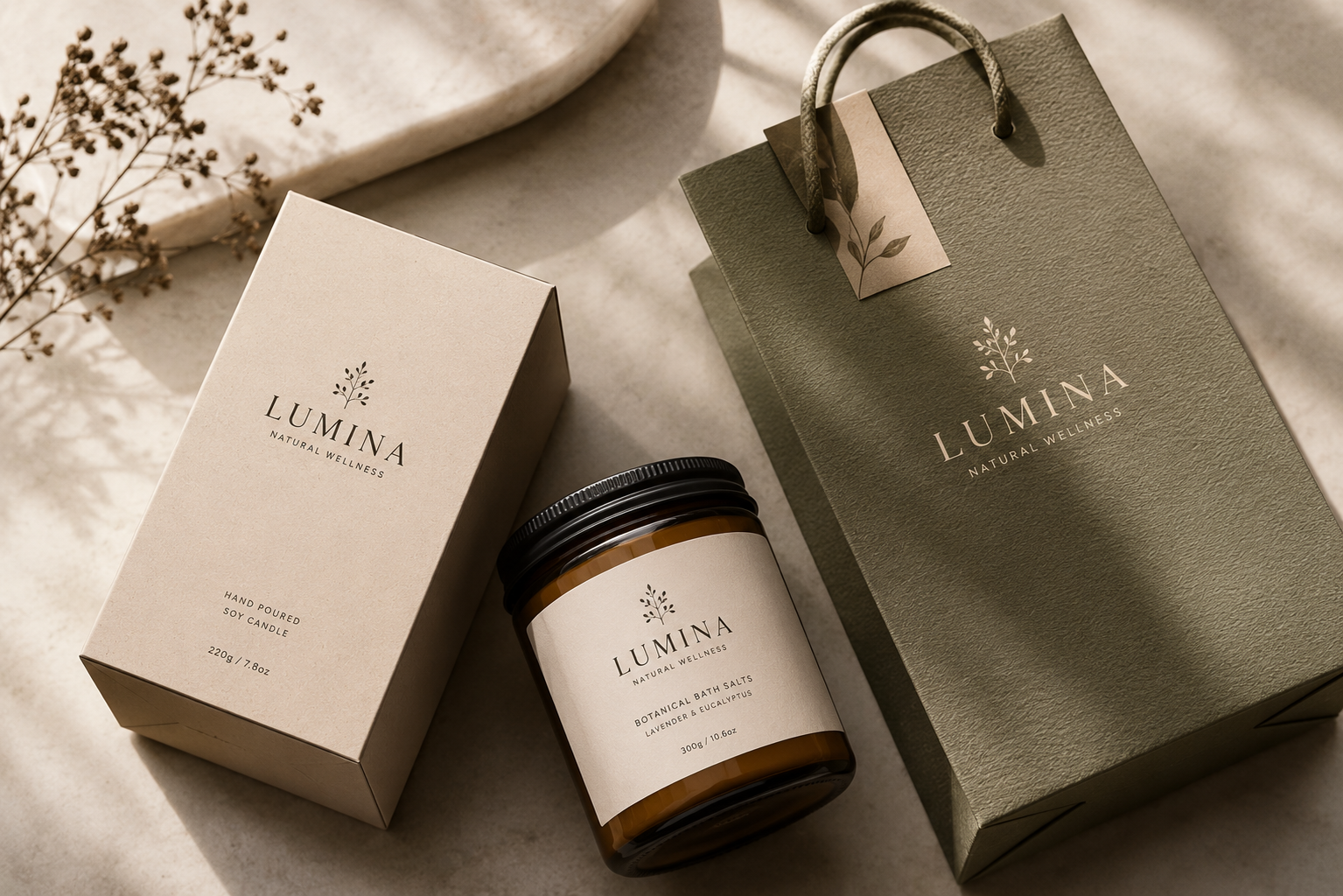
Packaging Design
The Silent Salesperson: Why Packaging Design Makes or Breaks a Brand
Before a customer reads a single review or scans an ingredient list, they have already made a judgment — based entirely on packaging. In the few seconds it takes to glance at a shelf or unbox a delivery, packaging has either earned trust or lost it.
Packaging protects the product while communicating its identity, value and purpose. Strong packaging attracts attention, builds trust, supports purchase decisions and creates a memorable physical brand experience.
Packaging is one of the only pieces of design that touches every stage of the customer journey: discovery, purchase, unboxing and even disposal.
What Packaging Design Actually Is
Packaging design is the process of creating the visual, structural and material presentation of a product’s container. It combines graphic design — color, typography and imagery — with structural design, material choices and brand strategy in a single physical object.
Good packaging does more than protect a product — it sells it, explains it and creates an emotional connection before a single word of marketing copy is read.
Why Packaging Matters More Than Most Brands Realize
- It is often the first physical brand touchpoint. For many products, packaging is the first tangible interaction a customer has and can be more influential in that moment than a website or advertisement.
- It drives purchase decisions on the shelf. In a crowded retail environment, packaging competes for attention in seconds, directly affecting whether a product is picked up or overlooked.
- It shapes the unboxing experience. In e-commerce, a thoughtfully designed box can turn a simple delivery into a memorable, shareable moment.
- It communicates trust and quality. Poorly designed packaging can undermine an excellent product, while considered materials and finishes can elevate perceived value.
Core Elements of Great Packaging Design
Structural Design
Before graphics are applied, the physical structure must protect the product, be practical to open and close and work efficiently in storage, shipping and display. Structural innovation, such as a resealable pouch or distinctive box shape, can be as memorable as the graphics.
Typography and Hierarchy
Packaging has only seconds to communicate what a product is, who it is for and why it is different. Clear typographic hierarchy ensures the brand name, product type and key selling points are legible and prioritized correctly.
Color Psychology
Color quickly communicates category and emotion. Green often suggests natural or organic qualities, black and gold can signal luxury and bright colors may feel playful or accessible. Consistent color also builds shelf recognition over time.
Imagery and Illustration
Photography, illustration and iconography help set expectations by showing flavor, use case or ingredients while contributing to the overall brand personality.
Material and Texture
The tactile feel of packaging — smooth, matte, textured or glossy — communicates quality as strongly as visual design. Materials increasingly need to align with sustainability expectations as well as aesthetics.
Functional Information
Packaging must clearly communicate essential information such as ingredients, instructions, certifications and legal requirements without disrupting the overall visual hierarchy.
Common Mistakes in Packaging Design
- Overcrowding the design with too much text, imagery or competing messages, making it difficult to process at a glance.
- Failing to differentiate on shelf and blending into the category instead of standing out through color, shape or layout.
- Skipping real-world testing and relying only on flat digital mockups rather than checking the design on an actual package at shelf scale.
- Neglecting the unboxing experience, especially for e-commerce brands where packaging strongly affects customer perception and sharing.
- Using inconsistent packaging across a product family and weakening recognition between related products.
Sustainability’s Growing Role in Packaging
Packaging design today cannot be separated from sustainability concerns. Customers increasingly expect brands to reduce excess materials, use recyclable or biodegradable components and minimize plastic use.
This has pushed designers to reconsider both appearance and construction — favoring mono-materials for easier recycling, reducing unnecessary layers and developing more efficient designs that require less material and ink.
The Future of Packaging Design
Several trends are actively shaping where packaging is headed:
- Minimalist, clean design: focusing on essential information and bold simplicity to stand out in cluttered markets.
- Smart packaging: using QR codes, NFC and augmented reality to connect physical packaging with authentication, information or interactive digital content.
- Sustainable materials: expanding recycled, compostable and reduced-plastic packaging solutions.
- Personalization: creating limited-edition, customizable, regional or seasonal variations that build novelty and urgency.
Final Thoughts
Packaging design sits at a unique intersection of art, engineering, psychology and marketing. It is often the most physical, tactile expression of a brand’s identity — and one of the few design touchpoints customers hold in their hands.
In a retail world where attention is scarce and competition is fierce, packaging remains one of the most powerful tools a brand has to be noticed, trusted and remembered.