
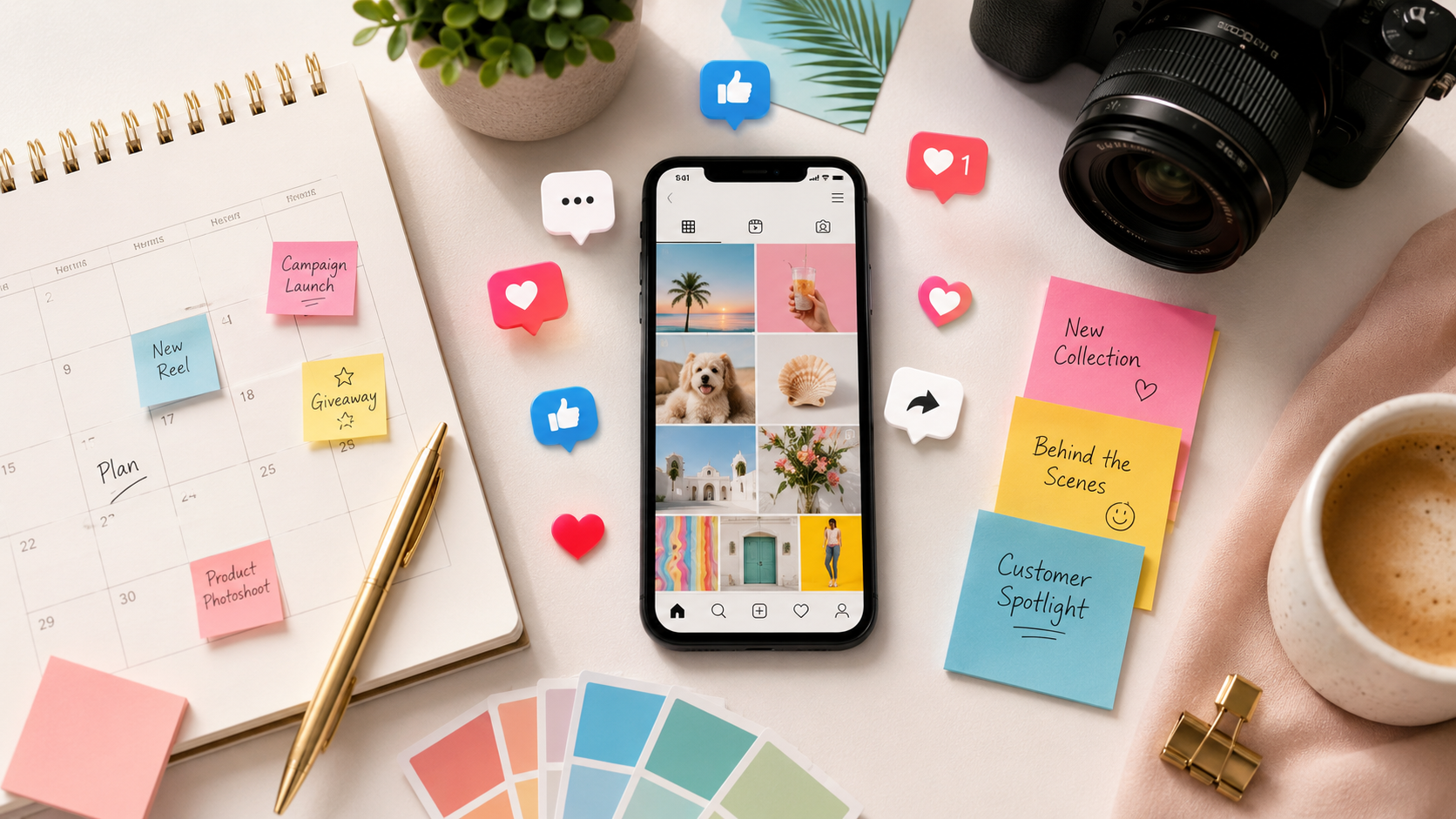
Social Media Campaigns
Beyond the Post: What Actually Makes a Social Media Campaign Work
Anyone can post on social media. Building a campaign that moves people — from scrolling past to following, sharing or purchasing — is a different discipline entirely.
A successful campaign combines a measurable objective, clear audience insight, one memorable creative concept, platform-specific content, intentional sequencing, active community engagement and performance measurement.
A social media campaign is not a single post or a series of unrelated content. It is a coordinated, strategic effort built around a clear goal, a consistent message and a deep understanding of how people behave on each platform.
What a Social Media Campaign Actually Is
A social media campaign is a planned, time-bound series of coordinated content and actions across one or more platforms, designed to achieve a specific marketing objective — whether that is brand awareness, a product launch, community building or sales.
Unlike everyday organic posting, a campaign has a defined beginning, middle and end tied together by a consistent theme, message and visual identity.
Why Strategy Matters More Than Content Volume
Many brands assume posting more often is the key to social media success. In reality, an unfocused stream of content often underperforms a smaller number of well-planned, purposeful posts.
A strong campaign answers key questions before a single post goes live:
- What is the specific goal — awareness, engagement, conversion or loyalty?
- Who is the target audience, and which platforms do they actually use?
- What is the core message, and how will it remain consistent across formats?
- What action should the audience take after seeing the content?
Without these answers, even visually beautiful content risks becoming noise.
Core Elements of a Successful Campaign
Clear Objective and KPIs
Every effective campaign starts with a measurable goal — follower growth, website traffic, sales conversions or engagement rate. These goals shape the content and determine how success will be measured.
Audience Insight
Strong campaigns understand more than demographics. They consider where the audience spends time, which formats they respond to and what emotional triggers motivate them to engage.
A Central Creative Concept
The strongest campaigns are built around one memorable idea — a hook, visual theme, challenge or story arc — that connects every piece of content rather than presenting unrelated posts.
Platform-Specific Adaptation
A campaign should not look identical everywhere. A polished Instagram video may need to become a fast, casual TikTok clip or a text-driven thread on X. The core message remains consistent while the format adapts to each platform’s culture and expectations.
Content Calendar and Sequencing
Great campaigns are sequenced intentionally — building anticipation, delivering the core message and following up with reinforcement or a clear call to action rather than releasing everything at once.
Community and Engagement
A campaign is not just about broadcasting. Successful campaigns respond to comments, encourage user-generated content and create participation rather than passive viewing.
Common Types of Social Media Campaigns
- Product-launch campaigns: building anticipation and awareness around a new release.
- Brand-awareness campaigns: focusing on visibility and recognition rather than immediate conversion.
- User-generated content campaigns: encouraging audiences to create and share content featuring the brand through hashtags or challenges.
- Influencer collaborations: using trusted creators to extend reach and credibility within specific audiences.
- Cause-driven campaigns: connecting a brand with a relevant social issue or cultural moment to build emotional connection.
- Seasonal or event campaigns: connecting content to holidays, cultural moments or industry events to increase relevance and urgency.
Common Mistakes That Undermine Campaigns
- No clear objective: producing content without defining what success looks like.
- Ignoring platform culture: publishing the same format and tone everywhere without adaptation.
- Inconsistent visual identity: creating content that does not feel cohesive, recognizable or memorable.
- Poor timing and sequencing: releasing everything at once instead of building momentum.
- Neglecting engagement: treating social media as a one-way broadcast rather than a conversation.
- Failing to measure results: missing the data needed to understand what worked and improve future campaigns.
Measuring Success
Campaign performance should be judged against the objectives set at the beginning using relevant metrics:
- Reach and impressions: how many people saw the content and how often it was displayed.
- Engagement rate: likes, comments, shares and saves relative to reach or audience size.
- Conversion metrics: click-throughs, sign-ups or sales connected to the campaign.
- Sentiment and share of voice: how people discuss the brand during and after the campaign.
- Follower growth: a longer-term indicator of brand momentum and retained interest.
The Future of Social Media Campaigns
Several shifts are shaping how campaigns are built and delivered:
- Short-form video dominance: platforms increasingly favor fast, authentic vertical video.
- AI-assisted content creation: using AI for ideation, copywriting and editing to accelerate production.
- Micro-influencer partnerships: working with smaller, focused creators who often generate strong trust and engagement.
- Community-first strategy: prioritizing engaged, loyal communities over follower count alone.
- Authenticity over polish: using relatable content that can outperform heavily produced, advertisement-like posts.
Final Thoughts
A successful social media campaign is not about posting more — it is about posting with purpose. Brands stand out when they treat social media as a strategic, creative discipline: setting clear goals, understanding the audience, building a consistent concept and adapting thoughtfully to each platform.
In a feed full of noise, a well-executed campaign does not just get seen — it gets remembered.