
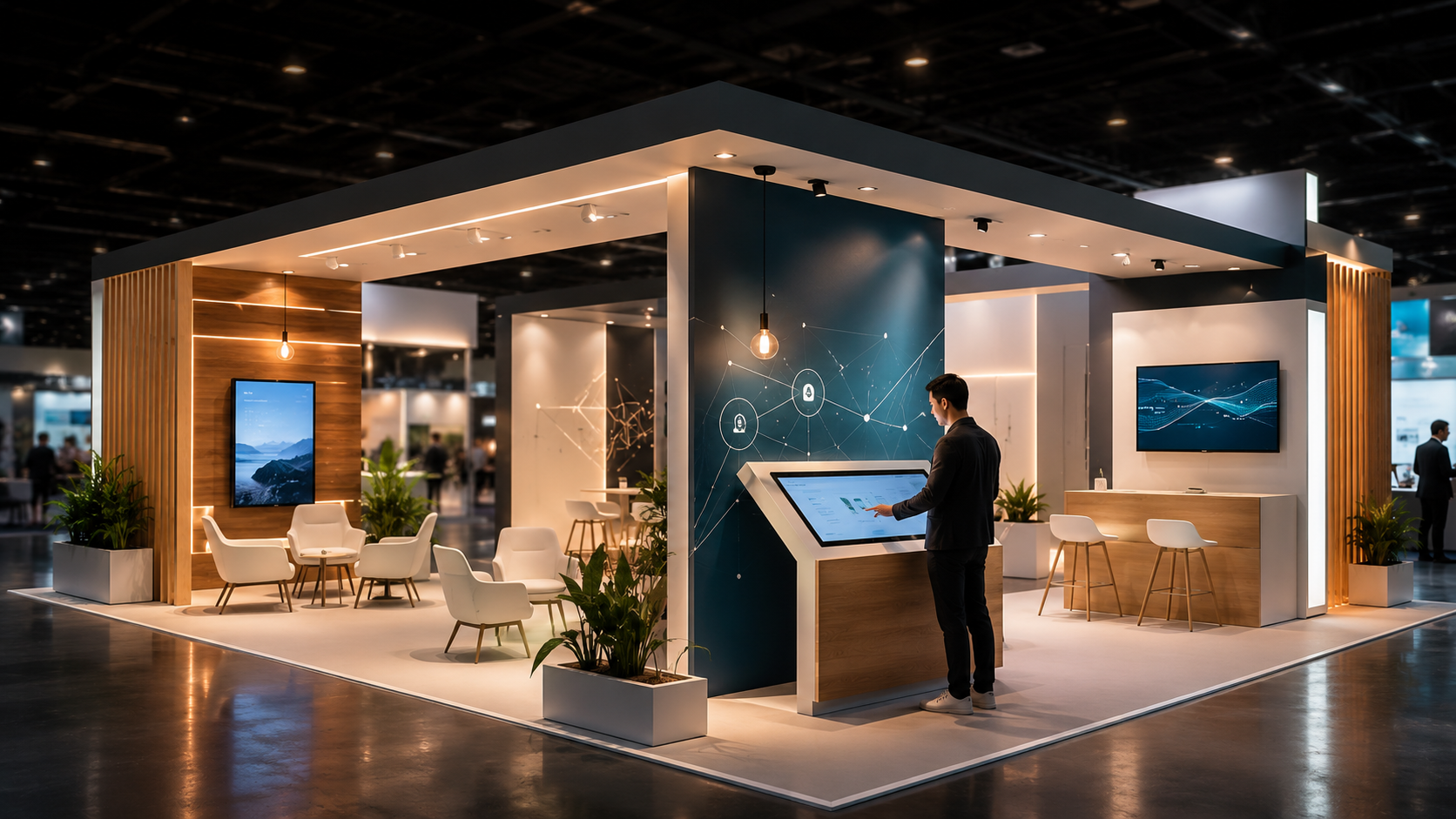
Retail & Exhibition Design
Designing the Experience: The Power of Retail & Exhibition Spaces
Long before someone reads your tagline or scrolls your website, they walk into your space — a store, trade-show booth, pop-up or exhibition hall — and form an impression in seconds.
Retail and exhibition design turns physical space into a brand experience. Strategic layout, lighting, materials, signage and storytelling guide movement, build emotion and encourage engagement or purchase.
Retail and exhibition design is the art and science of shaping that impression, turning physical space into a silent salesperson that guides behavior, builds emotion and drives action.
What Retail & Exhibition Design Actually Means
Retail design refers to the strategic design of physical spaces where products are sold — stores, showrooms, pop-ups and shopping environments. Exhibition design covers temporary or event-based spaces — trade-show booths, museum displays, brand activations and conference environments.
Though they serve different purposes, both disciplines share a core goal: using layout, materials, lighting and visual storytelling to influence how people feel, move and engage within a physical environment.
Why Physical Space Design Still Matters
In a world dominated by e-commerce and digital marketing, physical retail and exhibitions remain some of the most powerful tools a brand has:
- Multi-sensory impact. Unlike a screen, physical spaces engage sight, sound, touch and even smell, creating a deeply memorable impression.
- Direct human connection. Face-to-face interaction with products and staff builds trust and supports relationship-building that digital channels cannot fully replicate.
- Brand immersion. A well-designed space allows customers to step inside the brand’s world, reinforcing identity in a way that is felt rather than only seen.
- Impulse and discovery. Physical spaces encourage spontaneous discovery — customers finding products they did not know they wanted.
Core Principles of Retail Design
Store Layout and Flow
How a store is laid out directly shapes buying behavior. Common strategies include a decompression zone near the entrance, paths that expose customers to more products and the placement of high-margin or impulse items near checkout.
Visual Merchandising
Visual merchandising presents products to maximize appeal. Color blocking, thematic displays, mannequins and lighting help products feel desirable and easy to understand at a glance.
Lighting
Lighting sets mood and draws attention. Warm lighting can make a space feel comfortable and premium; bright, even lighting emphasizes clarity and function; spotlighting directs the eye to featured products or promotions.
Signage and Wayfinding
Clear, well-designed signage guides customers intuitively through a space, reduces frustration and reinforces brand identity through consistent typography, color and tone.
Sensory Branding
Scent, music and texture — including materials used in shelving, flooring and fixtures — contribute to how a shopper feels. Comfort and engagement can translate into more time spent in store.
Core Principles of Exhibition Design
Booth Layout and Openness
Trade-show booths need to balance visibility with openness. A booth that feels closed or cluttered discourages foot traffic, while an open, well-lit design with clear sightlines invites people in.
Storytelling Through Space
The best exhibition designs do not simply display products — they walk visitors through a narrative, often moving from an introductory brand statement to interactive demonstrations and a clear call to action.
Modularity and Reusability
Exhibition displays are often reused across multiple events. Reconfigurable panels, adjustable lighting and interchangeable graphics balance cost efficiency with visual freshness.
Interactive Elements
Touchscreens, product demonstrations, augmented-reality experiences and hands-on activities keep visitors engaged longer and create memorable, shareable moments.
Common Mistakes in Retail & Exhibition Design
- Overcrowding the space with too many products, graphics or messages, overwhelming visitors instead of guiding them.
- Creating poor sightlines where tall displays or awkward layouts block visibility into or across the space.
- Using inconsistent branding that does not match the quality of the company’s digital presence.
- Ignoring movement patterns and creating bottlenecks or dead zones that frustrate visitors.
- Neglecting accessibility for visitors with different mobility needs or sensory sensitivities.
The Future of Retail & Exhibition Design
Physical space design continues to evolve alongside technology and shifting expectations:
- Phygital experiences: blending physical spaces with AR try-ons, QR-triggered content and app-connected loyalty experiences.
- Sustainability-conscious materials: using reusable, recyclable and lower-waste materials in fixtures and exhibition builds.
- Personalization at scale: using data and technology to adapt displays or booth interactions to specific customer segments.
- Experience-first design: creating shareable, memorable moments that extend into social content and word-of-mouth marketing.
Final Thoughts
Retail and exhibition design proves that great design is not confined to screens — it lives in the physical spaces where people move, touch and experience a brand firsthand. Every layout decision, lighting choice and material selection is a deliberate act of communication, just like a well-designed logo or website.
In a world saturated with digital noise, brands that master physical space design create something screens cannot replicate: a real, memorable, human experience.